Minggu, 29 April 2018

The History Behind Origami Paper Folding

The History Behind Origami Paper Folding

Image source: https://blogger.googleusercontent.com/img/b/R29vZ2xl/AVvXsEgsiq1Eit4FKSGfBb9fQ0AwzeLb2gNCukz2XjogqAL5W21vBb8TqMYnCbFilldMZQNQm5MoFGP0Uz97HSOpnbl3Gv6I5YaZf3qTqlVJT1M9dKS62KlQNcICIVnkGiJpiPxeWzTgoz1hwhVC/s1600/rabt.jpg

The History Behind Origami Paper Folding

These days, origami is everywhere.

Its the subject of childrens books like Sadako and The Thousand Paper Cranes. Its being displayed in museums as art. Its even being used as an educational tool to help students learn fractions and problem-solving skills!

But what is the history of origami? How has it evolved over the years?

Read on to find out!

Where And How Origami Started

Even the word Origami has an interesting history behind it. Its actually made from two Japanese words: Ori, which means fold, and kami, which means paper.

Its a word that defines itself!

The art of origami arrived fairly shortly after paper began to be more available worldwide. Around the 6th century, monks began to bring paper to Japan.

However, as paper was still rare (and therefore expensive!) origami was mainly used in religious ceremonies.

Origami was used in wedding ceremonies, where folded butterflies symbolized the bride and groom. It was also folded into good-luck symbols that were worn and given by the Samurai, in the hopes of staying safe in battle.

It even played a part in ancient Japanese legends. For example, many ancient folktales tell stories of folded birds that took flight, transforming into real birds.

Origami: The Next Steps

Of course, it didnt take long for a global interest in origami to develop.

In the late 1400s, origami began to spread to Europe. Here, the folding techniques and created objects were also put to use in daily life.

It was popular in Europe to fold small boxes to hold jewelry or other lightweight items, or even to deliver private messages and letters!

Interestingly, we may owe much of what we know today about origami to kindergarten. The so-called Kindergarten System was created at the start of the 19th Century to help young children learn life skills, and to ease them into an educational setting.

The founder of the Kindergarten System, the German-born Friedrich Frobel, saw that paper folding and binding could help young children to learn valuable coordination and motor skills.

The reality is that many of the earliest kindergarten curriculums were filled with lessons in origami!

More and more European countries began to adopt Frobels Kindergarten System, and origami spread rapidly. In fact, the tiny packs of brightly-colored origami paper that we all first learned to fold on are a direct result of the Kindergarten Systems focus on origami.

Of course, as the idea of kindergarten spread so did origami.

Whats Next For Origami?

Today, there are classes, societies, and even YouTube videos all dedicated to sharing the art of origami with as many people as possible.

Origami never stops evolving, and new techniques are being invented all the time. An especially popular one is called wet-folding. Folders will lightly dip their paper into water and fold it. This helps the paper to hold its shape for even longer.

What will they think of next? Only time will tell.

To learn complex folding techniques, to get ideas from the experts, or just to be inspired by the intricate art form of origami, always keep your eye out for industry websites, museum exhibits, and video tutorial channels.

Related Posts:

How to Create The Funniest Viral Dog Videos
How Augmented Reality Learning is Transforming the Classroom
How Dungeons and Dragons Saves Lives
Everything You Need to Know Before Moving Into a Tiny House

Sabtu, 28 April 2018

The Gig Economy A Legal Opinion

The Gig Economy A Legal Opinion

Image source: https://cdn.inquisitr.com/wp-content/uploads/2016/02/Gig-Economy.jpg

The Gig Economy A Legal Opinion

The term "gig economy" is one that's thrown about regularly in the context of the courier and transport industry. There's no doubt that the trend towards temporary positions and short-term contracts with independent workers is on the rise and, no matter what side of the fence your opinion falls on, its potential ramifications should not be ignored.
Understanding the Gig Economy

As a particularly hot topic in the courier industry, it's important to understand just what it means for operations of your business, regardless of whether you're a self-employed courier driver or a commercial fleet manager. While the subject garners more than its fair share of negative publicity, it can actually provide a lucrative source of work for the self-employed courier driver. With a number of high-profile cases in the news recently, gaining a legal insight can be very helpful when navigating the minefield of information and opinions on the gig economy.

A Legal Insight

Philip Richardson is Partner and Head of Employment Law at Stephensons, a national law firm. With 14 years' experience as an employment solicitor, Mr. Richardson has extensive expertise across the board, specialising in negotiating terms and agreements, advising on performance issues, grievances, disciplinary and dismissal matters, restructuring, redundancy and defending tribunal claims. As a regular guest speaker at business network seminars, Mr. Richardson has opined on the gig economy in order to redress some of the negativity and offer a legal perspective.

Please note: The following is simply a summary of Mr. Richardson's legal perspective and personal opinion, and is in no way to be considered individual legal advice.

Scrutiny of the Gig Economy

A number of high-profile cases against companies like Uber and CitySprint have been reported on extensively in the media. The negative publicity surrounding the effective use of freelancers as a workforce, therefore skirting legislation requiring the implementation of the national minimum wage, has recently culminated in a successful claim by a bike courier against her employer.

Even if these companies are utilising freelancers on what equates to a full-time job, a loophole in the law means that they are not required to offer those workers any of the benefits of the traditional employment model. The Work and Pensions Committee insist that the government must work to close such loopholes as a matter of urgency, because not only does it allow for the exploitation of workers, but it also has the potential to reduce tax contributions and create pressure on the welfare state.

However, Mr. Richardson does not believe that affording a self-employed courier driver the same benefits as a full-timer (like holiday pay and sick leave) will actually have a huge impact on the financial operations of large companies like Hermes, ASOS and other online retailers that use a workforce of freelancers. He says that, for the majority of consumers who use operations with this kind of online business model, convenience and not solely price points can play a major role. He's of the opinion that many are willing to pay a higher price in return for the convenience of receiving goods delivered to their doorstep.

Case-by-Case

Despite recent tribunal decisions being seen by some as a landmark, Lord Justice Underhill (who oversaw the aforementioned case) has recommended caution, warning businesses and individuals against making generalisations, and stressing that all future cases will be taken on their own merits. But Mr. Richardson says that it is also vital that businesses take recent case rulings into consideration if they intend to engage workers on a freelance basis while seeking to place restrictions such as set hours/set rates on them.

Whatever your personal opinion on the gig economy, knowledge is power; it's important to arm yourself with as much information as possible from both sides of the argument to gain a genuine insight into its potential ramifications. Author Plate

Norman Dulwich is a correspondent for Courier Exchange, the world's largest neutral trading hub for same day self employed courier driver work in the express freight exchange industry. Over 5,000 transport exchange businesses are networked together through their website, trading jobs and capacity in a safe 'wholesale' environment.

The Elements of Targeted Global Marketing

The Elements of Targeted Global Marketing

Image source: http://slideplayer.com/6285150/21/images/39/The+Elements+of+Marketing+Mix.jpg

The Elements of Targeted Global Marketing

Global marketing is nothing but marketing done on national and international level and which involves understanding the similarities, dissimilarities and taking advantage of the opportunities to attain the goal. Concentrating on global marketing is as important as concentrating on domestic marketing if a company is aiming to increase sales.

The domestic market has become saturated in most categories of products and services, in all industrialized countries and hence, they started to deal with other countries to increase their sales. Usually in such case, goods that are too expensive for the domestic customers to buy are exported to other well-off countries.

When a company does marketing within the boundaries of a specific county, it has to compete with other domestic companies as well as international companies who are a part of the market. The marketing steps taken by the professionals are based on the taste of a specific audience. The product might not suit the taste of customers at a higher level. The other domestic companies that plan to go global hinder the growth of such companies. They become invisible at the international level as they are unable to cope with the growing competition and might not be aware of potential competitors. The product development is dependant on the need of the local residents. Such kinds of businesses are ethnocentric and are only bothered about their performance in the domestic marketplace.

Companies planning to go global should start with export to a foreign client first. The returns wouldn't be satisfying in the beginning. The export department can be introduced at the headquarters that deals with all the laws. There can be a possibility of becoming secondary exporters by bringing export management company into the picture, who will deal with the language problem, time difference, paperwork and customers. If managing the exports without any help, the export department can be started at an office located abroad. This office works in collaboration with the regional headquarters. But the respective offshore offices take the marketing decisions, as they will have best knowledge about the particular market they are operating in.

Multinational marketing involves marketing in many countries. The marketing is based on the requirements of different countries and the returns are rewarding. Each region should be studied individually based on development, production and marketing. Such kinds of markets are known as region centric. Global marketing involves the whole globe. The entire world is summarized as a single market and the products that are released in the market should fit the needs of any regional marketplace. Marketers all over the world make the marketing decisions. Such a kind of market is known as geocentric.

Automotive industry is one such market that saw a global boost in sales during the last fifty years. Earlier only the local companies like Ford and General Motors used to produce cars in America, but today other international competitors like Toyota and Honda are operating in the same market and have out done the local companies. Another key factor to the global marketing is the Internet, which introduced e-commerce. Businesses went going online and global. This encouraged the sales of the company and the figures are only increasing because of ever increasing Internet users. The geographical location of customers is no longer a hindrance. Global marketing management and business-to-business e-commerce is growing rapidly.

Product, price, placement and promotion are the elements of global marketing. The product created should be such that it can sell anywhere using the same method. It should consider the primary elements of all the markets. However, the language in which the product is named can be changed, where as the content can remain the same. The price is never constant. It should be decided after reviewing the market and the currency of the country. The variables which affect prices are location where the product is being produced, cost of ingredients, transportation charges, labor charges, etc.

Placement is how the product is distributed and how it reaches the targeted market. Like in third world countries, there is a lack of superstores, so they can be placed or sold at ordinary shops. After the product is developed and distributed, it should be promoted precisely known as advertising, promotion is one of the major steps of marketing and consumes major part of the budget. If it is possible to send out the same message worldwide in a relevant and cost-effective way, it sure must be put into practice but the challenge is really big.

Selasa, 03 April 2018

I Drive Safely Review - Providing Online Courses for Driver Education.

I Drive Safely Review - Providing Online Courses for Driver Education.

Image source: https://www.drive-safely.net/wp-content/uploads/2015/03/drivers-ed-idrivesafely-sales-screen.jpg

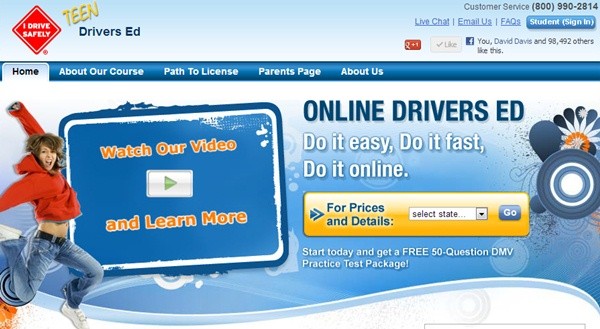
I Drive Safely are pioneers in online driver training and education programs with over 10 years experience and claim to have successfully graduated more than 1,500,000 safe and responsible drivers and the first thing I noticed while carrying out the I Drive Safely review was their professional looking website and approach towards online education. The commitment they have to quality has given them a reputation for providing excellent courses, outstanding service and innovations in technologies, they have a membership in the Better Business Bureau and have an A+ rating, which will assure you of their professional service, reliability and great customer support.

The online programs from the I Drive Safely review:

1. Teen Driver Education (driver ed)
2. Traffic School - Ticket Dismissal
3. DMV Sample Test Packages
4. Corporate / Fleet Driver Training
5. Mature / Senior Driver Improvement
6. Defensive Driving Course
7. Insurance Reduction Course

The site and courses are very easy to navigate, even if you're not good with computers. The courses are not hard to understand and can be taken from anywhere that has the Internet. The I Drive Safely Program has a memory feature that allows you to return to the same spot you left your lesson so that you can complete a course on your own time. All the courses that you need to effectively learn how to drive are available at I Drive Safely, everything from learner's courses to lessons on senior insurance discounts. I Drive Safely review their staff and has developed a team of experts that have come up with courses and use proven teaching techniques that use a variety of learning methods. This allows you to learn more information and retain it for a longer time period because it has been broken down into a number of specific chapters allowing you to learn about one subject at a time.

Site features and support:

1. 100% money-back guarantee
2. US based 24/7 customer support team
3. You don't have to know much about computers
4. Live chat
5. There are no downloads or extra software to purchase
6. Study from the comfort of your own home
7. Fixed price cost - no hidden fees
8. Parent's resources area

The only thing I didn't like during the I Drive Safely review was the system for tracking was too good. As I selected a State and moved to look at a different course, the same State page loaded automatically, which required me to enter the homepage to change it. Thus it provides a valuable format for information of the relevant State directly without any delay, which is good news for the student.

As for the written material, it delivers the information in a logical manner so you can learn exactly what you need to learn and nothing more, as the text will be easy to read and understand. The thing I like the most is the teaching method. Using visual aids, such as animation and short films, really helps the information sink in. This will help you to remember all that you have read, and more importantly, when you are being tested on the information and later driving, you can remember the lesson, it will help all things make a lot more sense.

The I Drive safely online courses let you go back and review any topic or lesson you want and you can do it over and over again until you feel like you understand it, this makes it distinct from classroom settings where you either pick it up first time or not at all. If you are a teenager and you want your parents to purchase this course for you, you should let them know that the online defensive driving program on I Drive Safely is known to reduce both traffic violations and collisions.

It's straightforward to take, handy and best of all it gives great confidence to pass driving tests and be a much improved and safe driver, so this is the final word on the I Drive Safely review.

To discover more on the I Drive Safely review along with driving tips and info, plus reviews of the best online driving course and products, read more from Dave Treadstone at Driving Test Training.

Minggu, 01 April 2018

How to Wholesale Bank Owned REO Foreclosure Properties

How to Wholesale Bank Owned REO Foreclosure Properties

Image source: http://www.firstchoicehsv.com/wp-content/uploads/2016/02/foreclosure-house-up-for-sale.jpg

Wholesaling is one of the most popular approaches to real estate investing. It appeals to both beginning and seasoned investors.

With the market in its current condition more and more investors find that they are coming across hordes of motivated sellers. However, this windfall of prospects all seem to have one trait in common. They don't have any equity! This little dilemma is causing many investors to turn their efforts toward bank-owed foreclosures.

The single biggest advantage associated with REOs is the fact that equity can be created instantly either by finding a hot deal or through shrewd negotiation. There's nobody telling the bank that they owe too much on a property and can't lower the price a bit. In theory...any house could be sold for as little as a dollar.

In fact, there is only one downside to wholesaling REO properties. Non-assignability. When an investor gets a bank owned property under contract it always comes with multi-page addendums that make the deal non-assignable.

Many investors stop right there and turn away to other paths such as short sale negotiation or subject-to investing not knowing that there are in fact four different methods to workaround this roadblock.

Method #1 - Add to Contract, Then Quit Claim

Most banks do not have an issue with adding an additional party to a contract, they just do not want the ORIGINAL parties removed from it at any time. So Ivan Investor can get an REO property under contract for $50,000. Ivan calls Louie Landlord and after talking about the deal Louie agrees to pay a total of $60,000 for the property.

Ivan calls the bank up and requests that an addendum be drawn up that adds Louie to the contract and title. The Bank agrees and everyone shows up on closing day.

Louie brings TWO certified checks. One for $50,000 for the purchase of the property, and one for $10,000 made out to Ivan. Everyone closes on the property at which time both Ivan and Louie are the owners of the home. Louie hands Ivan the $10,000 check and Ivan signs a quit claim deed removing him from title on that property. Pretty simple, right?

Pros: The advantage to this method is that there is only one set of closing costs. It's a rather simple and straight-forward method that works for most deals. It works around the 90-day deed restriction that comes packaged with many Fannie/Freddie properties.

Cons: Here are the negatives that come with this method. This does NOT work for HUD properties because HUD does not allow any changes to the parties that are on the original offer and the end buyer usually cannot be getting a mortgage because a mortgage company won't allow you to be on title if they are lending someone else money against the home.

Method #2 - Simultaneous Double-Close

The simultaneous double-close (also known as a simul close or a "dry" close) is actually two transactions. An investor is buying from the bank and then instantly reselling to a third party in a separate transaction. It follows a typical A-to-B-to-C deal flow.

The "twist" that comes with this method is that the wholesale investor never actually brings any money into play. The end-buyer's funds are used to fund BOTH transactions. This is possible because, as long as both closings take place on the same day, it doesn't matter which one closes first for the title company's accounting purposes. The second transaction (B-to-C) could take place a 9am with all the paperwork for that transaction taken care of at that time while the first transaction (A-to-B) doesn't close until 2pm.

What really matters is that the deeds are RECORDED in the proper order when filed with the county. It's important at that time to have the A-to-B deed filed first with the B-to-C deed following on record.

Pros: This works well for those who have zero cash as long as they have a good title company that will still do these types of transactions. It still works even with end buyers that are getting conventional financing if the end buyer is getting their financing through the right lender.

Cons: This method does NOT work if the end buyer is getting FHA financing. This method also does NOT work for Fannie/Freddie foreclosures in most cases because these super-banks put a deed restriction in place that prevents you from reselling the property to ANYONE for a full 90 days.

Also, with all double-close deals there are two sets of transfer taxes, recording fees, and other closing costs that cut into your profit. Of course you can just build that into the deal by lowering your offer price in order to circumvent this small annoyance.

The biggest roadblock to getting these transactions closed is the fact that fewer and fewer title companies are comfortable with the "dry" simultaneous close where the wholesale investor brings in no cash to the deal. In fact, they are often refusing to close these deals at all!

Method #3 - True Double Close

The true double close (also known as a "wet" close) is the same as the simultaneous close in that the investor is buying the foreclosure property and instantly reselling it to the end buyer for a profit. However, the wholesale investor is actually bringing in his own cash to fund his end of the deal.

This little difference makes the title companies happy but it doesn't work so well for beginning investors that don't have piles of cash sitting around to make the deals work.

Then came Flash Funding. There are "transactional funding" lenders will lend you all the money you need to do these same-day double-close deals...for a price. Most will never run a credit check or request an appraisal on the property.

The pros and cons to this method are pretty much the same as the simul close, except that on the good side more title companies are willing to do business with you if you go this route and on the bad side you have additional costs in the form of Flash Funding fees chewing away at your profits.

Method #4 - Sell The LLC

This last method has been popularized by Steve Cook who's said that he swiped it from commercial real estate investors who have been using it for years to avoid paying transfer taxes.

The idea is that an investor would submit an offer in the name of an LLC. If he was writing an offer on 123 Main Street, he might put the offer in with the buyer as "Main Street Holdings LLC". If the offer is accepted, the investor immediately faxes in his LLC articles of organization and creates the company to match the Buyer on the purchase agreement.

From there the investor finds his end buyer and they agree that on closing day the end buyer will purchase the entire LLC from the original investor for the amount of the wholesale fee. From there, as the new owner of the LLC, the end buyer is empowered to close on the original transaction and purchase the property.

Pros: The upside to this method is that you workaround the extra costs in the form of transfer taxes and/or Flash Funding fees that come with the two Double-Close methods, and for those who are concerned about guarding their privacy, your name never goes on the deal.

Cons: The major obstacle to this one is that the end buyer has to pretty much be paying cash. Banks do not loan traditional mortgages (either to owner occupants or investors) in company names. You have to buy it in your own personal name to get a mortgage. Other concerns are that if you do this often enough you may attract the attention of state regulators who are confused as to why you start and sell 5-10 LLCs each month.

These four major methods are pretty much all an investor needs to know in order to start wholesaling bank owned REO foreclosures. None of these methods require the wholesaler to bring his or her own cash into play other than the initial earnest money deposit and none require a credit check. One of them will work for pretty much any situation, whether the end buyer is paying cash or getting financing enabling you to earn large checks on a consistent basis by wholesaling REO foreclosure properties.

Sabtu, 31 Maret 2018

How to Use Seminars as a Morale Boost at Work

How to Use Seminars as a Morale Boost at Work

Image source: http://image.slidesharecdn.com/effectiveleadershipqualities-140509081424-phpapp01/95/effective-leadership-qualities-14-638.jpg%3Fcb%3D1399623546

Employee morale can be a fickle enemy that comes and goes with wavering stability. Perhaps the energy in your workplace has suddenly changed with a new season approaching.

Perhaps theres even been some tension between coworkers.

When it comes to a successful business, everyone needs occasional help to stay engaged and motivated. A morale boost is sometimes necessary to get your team back on track and headed swiftly towards their goals.

Through exciting team building exercises, your employees wont roll their eyes at quarterly seminars. Whats more, you can reignite the fire beneath your team.

Have no fear, the ultimate guide on how seminars can boost your workplace morale is here:

1. Communication-Based Seminars Provide A Morale Boost

Transparency between manager/boss and employees is essential. During your seminar, utilize communication building. Create activities to help your team understand that communication in your workplace is a free-flowing highway.

Let your employees feel informed through a seminar that focuses on respect, gossip, and effective ways of communicating. At the end of the seminar, have an open discussion.

Invite your employees to ask whatever questions theyd like to.

Present upcoming changes or new goals in your seminary through open communication. Keep the seminars regularly scheduled and invite all leadership and employees. Improve your relationships through communication-based seminars.

2. Make Seminars Fun for the Ultimate Morale Boost

Make your seminars fun to avoid having your team dread them every month. Remind your employees through a fun and interactive seminar that their career field doesnt always have to be mundane and boring. For the ultimate morale boost, consider incorporating fun into the workplace

Surprise your employees in a seminar with an upcoming project that ends up being the reveal of a long weekend or a day off. Suprise them with half-days or long weekends after seminars that are heavy and work-related.

For the ultimate seminars for your team in the coming year, consider SeminarFest 2018.

3. Focus on Team-Building and Individuality

Seminars based on team-building can help your employees cope with change. Seminars can help your team understand management. Through understanding management needs, theyll understand what is expected of them.

Let your staff share who they are as individuals so they feel they can bring their personality to work. Letting your employees shine individually will make them feel special, needed, and will give a huge morale boost. When people feel they are valued, their work ethic improves.

4. Be Creative

Consider holding your seminar in an escape-room. Your team will have to move throughout the office and solve problems before moving on to the next step. Let your team play games that involve problem-solving.

Through a seminar that is creative and engaging, youll hold your employees attention. Give them the information they need in a way that will help them retain it.

Find ways to teach your team whats necessary through creative tactics. Use positive articles in an entertaining powerpoint to help maintain positive energy in your workforce.

Go Big

When it comes to seminars, think big. Make them bold, engaging, fun and creative. Let your seminars be a welcome reprieve to you and your team. A happy workplace is a successful workplace.

For more tips and tricks on self-improvement, motivation, and a positive workplace, click here!

Related Posts:

8 Reasons You Should Have an Escape Room Party
12 Local SEO Solutions That Will Help You Outrank
How to Build a Strong Promotion Strategy for a
Why a Logo Maker Is a Must for Advertising

How to Use Parkinson's Law to Increase Your Productivity

How to Use Parkinson's Law to Increase Your Productivity

Image source: http://madefreshly.com/blog/wp-content/uploads/2015/02/parkinsons-law1.png

Back in school, I remember learning about Parkinson's Law. It was taught in one of my classes. Parkinson's Law states, Work expands so as to fill the time available for its completion. I remember reading that with a yawn. At the time, it didn't mean much to me, nor did I fully understand it. But as I got older, I realized that Parkinson's Law is a really important concept.

Maybe you've learned about Parkinson's Law too. Parkinson's Law means that if you have, say, 10 hours to complete a task, then it'll take you 10 hours to complete it. If you have 2 hours to complete the task, then you'll take 2 hours to complete it.

You've probably seen evidence of it in your own life. Whenever you were faced with a tight deadline, you instantly worked harder and more productively. Failing to meet the deadline was not an option. Somehow, you miraculously got the work done and met the impossible deadline.

On the other hand, when you had all the time in the world to complete a task, it was easy to slack off. After all, the work didn't need to be done so soon. So you probably worked much less productively.

When you have a tight time limit or deadline, it forces your brain to figure out a way to get it done on time.

When I was 16, my teacher gave the class a programming project: Make the game Monopoly. We were given 2 months to complete it. I completely underestimated how long it would take. 2 months seemed like a long time, so I took my time working on the project.

When the due date came near, there was still a lot of work left to do. It seemed almost impossible to get it done on time. The night before the due date, I frantically programmed and worked feverishly to get it done. I stayed up all night working at it and didn't sleep, working until the morning. Somehow, I miraculously got it done and handed it in on time (and enjoyed my A on the project).

If I didn't have such a tight deadline, it would have taken me much longer to complete the project. I wouldn't have worked as productively.

But productivity is important for your business. The higher your productivity, the more you get done in less time. And the more results and income you generate for your business.

So how do you apply Parkinson's Law to boost your productivity? Whenever you have a task, give yourself a time limit to complete it. Make the time limit short, but realistic at the same time. You must take the time limit seriously, just like client deadlines, otherwise it's too easy to break the time limit and be unproductive. Do whatever it takes to get the task done within the time limit.

If the task is large and will take more than a day to complete, you can give yourself a deadline instead of a time limit. Make the deadline realistically short, just like for time limits. You could also try breaking the task down into smaller tasks and use time limits for the smaller tasks.

So if you want to increase your productivity, give Parkinson's Law a try.

The No Frills Business Model

Image source: https://image.slidesharecdn.com/futureenterpriseinnovativebusinessmodels24november2015-160125094645/95/business-model-innovati...